
At this point, the level of pearl-clutching surrounding NBA Tanking Discourse almost feels obligatory.
Look, we all agree it is bad when teams lose on purpose in a competitive sport. It is even worse when they do it inside a multi-billion dollar entertainment product built on expensive tickets, gigantic TV rights deals, and hundreds of legalized gambling markets on every game.
But when league officials like Adam Silver (and sports media writ large) cry foul about the scourge of NBA tanking, they are choosing intellectual dishonesty. We all know why this is happening: the league created a system designed for this to happen. In that sense, tanking is not only justified, but a strategic necessity.
If the NBA wants it to stop, they could lose the hand-wringing and change the incentives.
FIRST PRINCIPLES
The goal of basketball is to win each game by putting the ball in the hoop more than your opponent. The goal of the NBA is to identify the best team each year, through an eighty-two game regular season used to seed the top two-thirds of the league into a playoff tournament that crowns a single champion. The goal of NBA franchises is to win as many championships as possible; to have sustained excellence.
I’m not trying to be pedantic. I just mean to highlight the obvious truth no one wants to acknowledge: NBA teams are always competing for two championships at the same time: this year’s, and next year’s.
As soon as your team is no longer plausibly competing for this year’s championship, the single most competitive thing you can do is increase your chances of winning next year’s championship. In a league where the path to future championships can swing with a single transcendent draft pick, “Try to win meaningless games in March,” is managerial malpractice.
Things have deteriorated in recent years because teams are no longer adhering to the framework of “mathematical elimination,” before they get a jumpstart on competing for the next year’s championship. This is because there is a first-mover advantage in being the first to tank. If you know your team stinks, and you are ten games under .500 at the All-Star break, it might make sense to get a jumpstart on tanking even if you still have a three percent chance at the play-in tournament. A player like Victor Wembanyama can alter the course of your franchise for two decades!
When the league asks teams to ignore that reality out of a vague “respect for the game,” what they are really saying is: “Please act against your own self-interests so our late-season TV ratings don’t suffer.”
And so we are left with everyone gaslighting one another, paying lip service to the idea of trying to win every game, while shutting key players down for the season over vague injuries, decisions you doubt teams would make if they were in the hunt. We all lie to ourselves about the importance of respecting competition, while ignoring the fact that eliminated teams are actively competing for the SECOND CHAMPIONSHIP (next year’s title.)
Losing the final game of a season when you’re 10-61 and playing another 10-61 team is the rational thing to do, and it is absurd for any serious fan of the NBA to say otherwise.
This is a league office problem, and only they have the power to fix it.
DEFINING THE PROBLEM
The NBA is in the optimism business. They sell hope to thirty separate markets. Every franchise has to feel like it is just a few decisions away from truly competing. And so the league designed a system meant to promote parity. The salary cap and rookie draft were instituted in hopes of equal talent distribution across every market.
But the NBA is a unique sport, in that one player has the power to tilt an entire era. This makes the #1 rookie draft pick the single most valuable tool for changing a team’s fortunes. And so teams started tanking to acquire generational talent. The lottery was implemented in 1985 to minimize that incentive, but instead it just turned the strategy into a probability game. The worst teams still had the best odds, they just lost the guarantee.
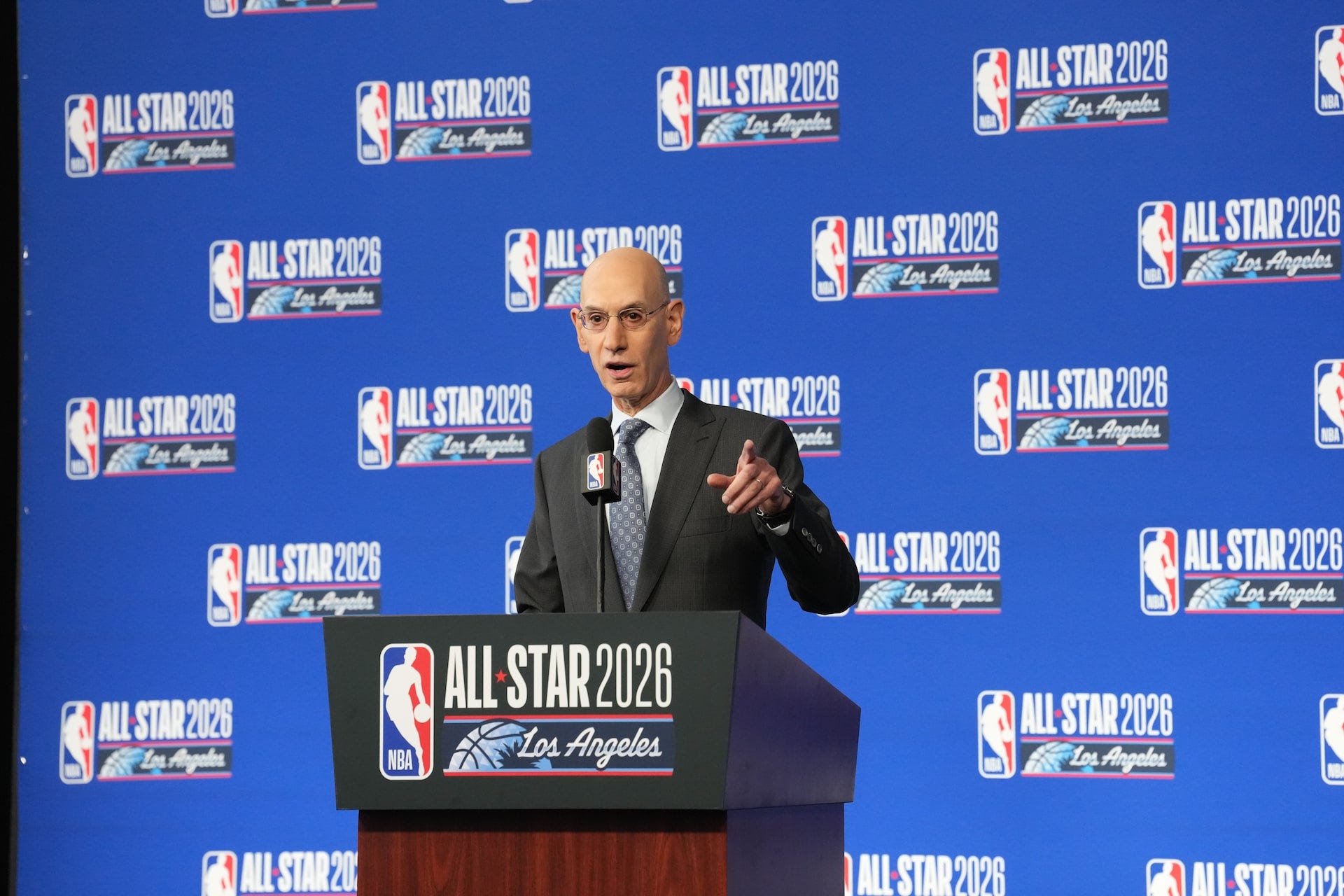
And so, as has become an annual tradition, a large portion of Adam Silver’s 2026 All-Star Break press conference was devoted to discussing the problems of tanking. The NBA wants to help bad teams reverse their fortunes, but tanking scrambles the true definition of “bad.” Novel concepts like The Wheel have been thrown out in the past, and just yesterday, league officials floated the idea of completely eliminating the rookie draft to the Athletic.
Potential solutions must not reward the middle class at the expense of the league’s bottom feeders, and they cannot stifle strategy in such a way that teams find themselves stuck in purgatory, without hope, unable to change their trajectories.
Here’s the key: as long as draft order is tied in any way to losing, teams will find a way to tank. You can adjust the probabilities, and wag your finger at press conferences, but incentives are incentives.
THE SOLUTION HIDING IN PLAIN SIGHT: MAKE TEAMS COMPETE FOR PICKS
Am I crazy to suggest the solution to all of the NBA’s problems is simple? Stop awarding draft picks based on losing, and start awarding them based on winning (after you’ve been eliminated).
Eliminate Adam Silver’s play-in tournament and return to a 16-team playoff: 14 automatic berths + 2 berths earned via the Rookie Draft Tournament (one per conference). This gives the playoffs a true scarcity, as less than 50% of the league earns automatic berths.
Seed the other 16 non-playoff teams into a single-elimination tournament for the #1 pick, also broken down by conferences.
Best yet, the finalists of the single-elimination tournament not only secure the top two picks, they also make the real playoffs as the #8 seeds in their respective conferences.
How This Works in Practice
While the tournament for the #1 pick would be single-elimination, the allocation of picks #3-16 would be decided by a double-elimination bracket. Every pick must be decided by a H2H matchup until all 16 spots are allocated.
The incentives flip in an instant: teams will always be playing for playoff seeding up until the final game of the year. The league’s late-season meaningless games problem is replaced by high-stakes matchups where a franchises’ future depends on winning.
But Ben, this means a team could finish 8th in its conference during the regular season, get the #1 overall seed in the Rookie Draft tournament, immediately lose, and end with something like the 10th overall pick just because the ball didn’t bounce their way in one game! How is that better?
First, the 8th seeds in the actual NBA playoffs aren’t even in the current lottery. Second, being in control of your own destiny is the entire essence of sports. You play to win the game. If you lose in the first round of the Rookie Draft tournament, why are you upset at me?
It is no different than March Madness: Virginia only has itself to blame for losing to #16 UMBC. They played an entire season and were rewarded with the #1 overall seed, only to lose to a #16 seed. That’s life!
Also, even though the fight for the top two picks are single-elimination, the tournament itself is not. That same team could claw its way back to a top five pick if they string together wins. What we’re solving through single elimination is the problem of truly horrible teams (think Hinkie-era 76ers) having no chance in a 5-7 game series against playoff teams, and getting stuck with the 16th pick in the draft.
But Ben. Ben. Are you not just shifting the “tanking” to a different part of the NBA standings? Won’t teams 12-20 overall potentially tank near the end of the season if they think the reward of the #1 pick outweighs the probability of losing 4-1 in the first round of the playoffs?
This is a great question, and definitely the biggest flaw in my proposal. But consider this: right now we have a tanking problem that affects almost half of the league to some degree. It’s rampant. Even if we accept the premise of this question, it requires us admitting that we’re cutting the problem in half.
I also think this would be tougher to do in practice. The gap between the #5 and #8 seeds in each conference bracket is usually pretty close, a few games here or there. And the gap between the #8 team and the #11 teams in each conference is usually much larger. A team that’s fifth in the West after seventy games has twelve games to make a meaningful push for playoff seeding. It would be difficult for them to pivot or adjust course until it was likely too late.
The Rookie Draft tournament is volatile. #1 seeds may have the best chance at getting the #1 pick, but they could just as easily end up with the #14 pick. Are we sure teams locked into the sixth seed are going to throw their playoff guarantees away for a shot at the #1 pick? This is where the standard rhetoric around tanking actually starts to hold weight: if you are a winning team trying to compete for a title, it’s corrosive to your locker room to try to game the system by turning your competitiveness on and off. It’s one thing for terrible teams to pack it in when they have nothing to play for; it’s a whole other thing for talented playoff teams to try to be bad for five games, and then turn around and win four games in a row.
Can we fully eliminate tanking in every form? Probably not. But even in this scenario, “tanking” is reduced to the final couple games of the season, and becomes a fascinating strategic conversation. Imagine the talk radio segments as the Charlotte Hornets try to navigate the scenarios of being the #7 seed in the East vs. the #1 seed in the Rookie Draft, with Cooper Flagg on the line.
By forcing teams to actually play one another to determine draft order, the league turns its biggest problem into a strength, celebrating meritocracy.
Adam Silver’s Legacy
This is a deciding moment for Adam Silver’s legacy. He doesn’t need another band-aid solution.
Right now, the NBA keeps trying to pay lip-service to the optics of competition without actually adjusting the incentive structure undermining it. This is why every anti-tanking proposal feels toothless: more rules, more public scolding, more of the same.
If Silver changes the incentive, the tanking will stop. If he keeps the incentive in place, he’ll have to answer the same questions at next year’s ASG presser.
A Rookie Draft Tournament ends tanking forever by forcing franchises to fight for their future.
Oh, and it’s must-see TV. What’s not to love?